




Understanding EPI3
EPI (Exocrine Pancreatic Insufficiency) is a condition that occurs when the pancreas is unable to provide the enzymes needed to digest food. When you have exocrine pancreatic insufficiency the body can’t properly digest and absorb fats, proteins, and carbohydrates from the food you eat.
This means that after you eat, food passes through your system without being fully digested and can cause troublesome gastrointestinal symptoms. Additional complications that can result from EPI include muscle loss, skin problems, brittle nails and hair loss.
The pancreas and its role in the digestive system5
The pancreas is a pear-shaped organ in the back of the abdomen (belly) behind the stomach. It is about 6 inches long and is part of the digestive system. It produces enzymes that help with digestion and sends out hormones that control the amount of sugar in the bloodstream.
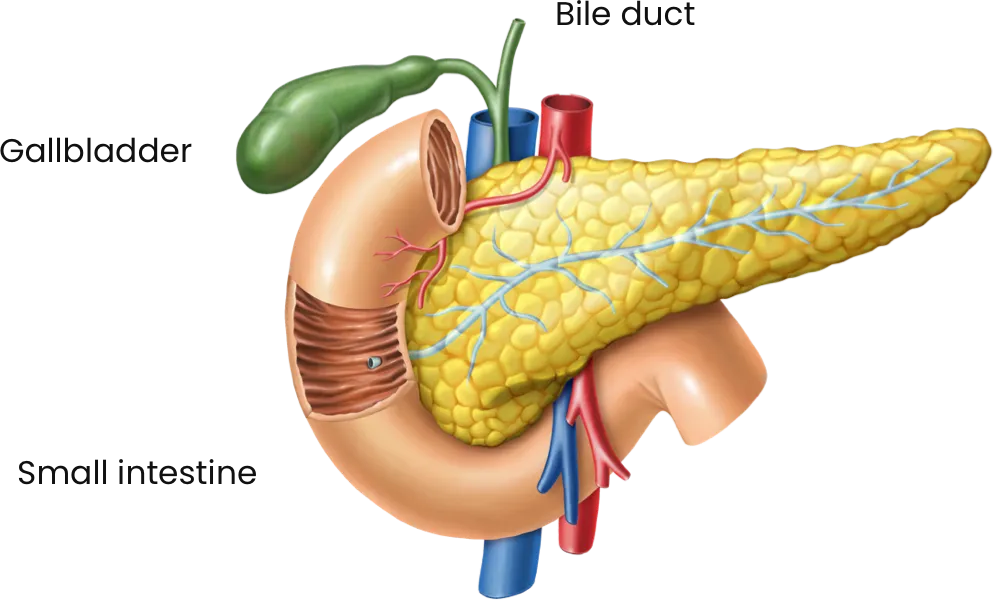
PANCREAS
The gland that produces digestive enzymes runs the length of the pancreas.
When food enters the stomach, the pancreas releases the enzymes into small tubes that flow into the main pancreatic duct.
The pancreas produces three types of enzymes to help digest food:
- Lipase: Works with bile (a fluid produced by the liver) to break down fats.
- Amylase: Breaks down carbohydrates for energy.
- Protease: Breaks down proteins
Treating and managing EPI4,6
EPI is diagnosed based on a combination of patient history, symptoms and specific laboratory tests. The symptoms of EPI can be similar to other digestive conditions — which can complicate the process of diagnosing it. The primary treatment for EPI is called pancreatic enzyme replacement therapy (PERT). This is a therapy that replaces the enzymes your pancreas isn't making — a prescription medication taken every time you eat.

There’s no one-size-fits-all approach to treating EPI. In addition to enzyme replacement therapy, EPI patients can benefit from working with their doctor or a registered dietitian to manage their diet. This ensures they are receiving the right nutrients and their chronic symptoms are controlled.

We can help make the conversation easier
This document provides helpful tips to support you when speaking with your doctor about your chronic stomach and digestive issues — and whether EPI could be the cause.